
Indoor vs Outdoor Gun Ranges: Which Is Right for You?
- Uncategorized
-
Jan 04
- Share post
Introduction
You’ve just purchased your first firearm, completed your safety course, and now you’re ready to practice. But when you start searching for a place to shoot, you’re faced with an immediate decision: should you visit an indoor or outdoor gun range?
This choice matters more than you might think. The type of range you choose affects everything from what you can shoot to how comfortable you’ll be while practicing. Indoor and outdoor ranges each offer distinct advantages and limitations that can significantly impact your shooting experience, especially as a new gun owner.
In this guide, we’ll break down the key differences between indoor vs outdoor gun ranges, helping you make an informed decision based on your specific needs, goals, and preferences.
What Are Indoor Gun Ranges?
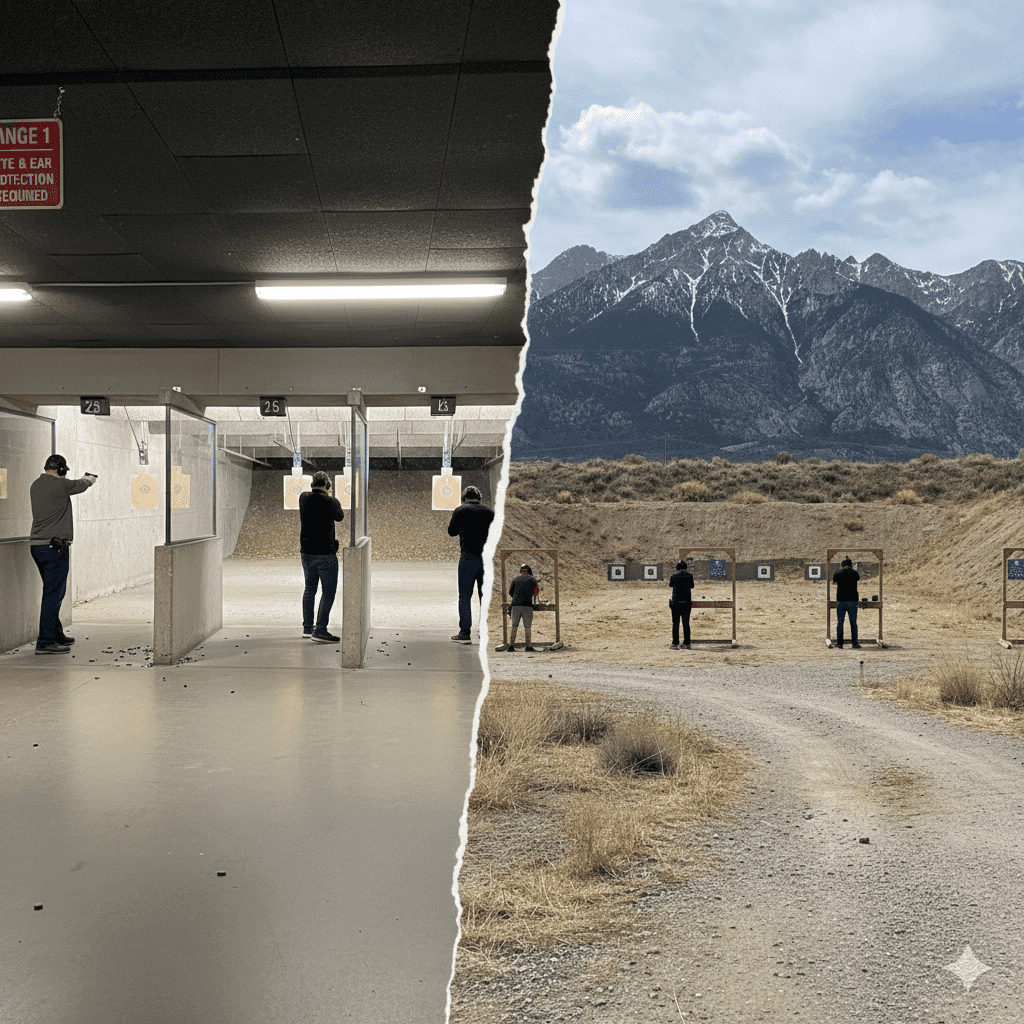
Indoor gun ranges are enclosed shooting facilities typically housed in commercial buildings or dedicated structures. These climate-controlled environments feature individual shooting lanes separated by dividers, with targets set at fixed or adjustable distances.
Most indoor ranges accommodate handguns and some rifles, though restrictions often apply based on caliber and projectile type. You’ll find these facilities in urban and suburban areas, often attached to gun shops or standalone shooting centers.
The controlled environment means you can shoot year-round regardless of weather conditions. Advanced ventilation systems remove smoke and airborne particles, while soundproofing and acoustic materials help reduce noise levels.
What Are Outdoor Gun Ranges?
Outdoor gun ranges operate in open-air environments, ranging from simple cleared fields to sophisticated facilities with multiple shooting disciplines. These ranges take advantage of natural terrain and typically offer much longer shooting distances than their indoor counterparts.
You’ll encounter various outdoor range types including rifle ranges, pistol bays, trap and skeet fields, and even tactical training areas. Some outdoor facilities span hundreds of acres, providing diverse shooting experiences in a single location.
Weather plays a significant role at outdoor ranges. You’re exposed to sun, rain, wind, and temperature extremes, which can be both challenging and beneficial for realistic shooting practice.
Key Differences: Indoor vs Outdoor Gun Ranges
Distance and Shooting Capabilities
Indoor ranges typically limit shooting distances to 25-75 feet, with some facilities extending to 100 yards for rifle lanes. This shorter range works perfectly for handgun practice and basic rifle fundamentals but limits long-range shooting.
Outdoor ranges excel at distance. Many facilities offer 100, 200, 300-yard lanes, and some specialized ranges extend beyond 1,000 yards. If you own a hunting rifle or want to develop long-range precision skills, outdoor ranges provide the necessary space.
Firearms and Ammunition Restrictions
Indoor ranges usually restrict:
- High-powered rifle calibers
- Steel-core or armor-piercing ammunition
- Shotguns (in some facilities)
- Certain rapid-fire techniques
These limitations protect the range’s backstop system and ventilation capabilities. Always check specific restrictions before visiting.
Outdoor ranges generally permit:
- All handgun calibers
- Rifle calibers of all sizes
- Shotguns for sporting clays and bird shooting
- Steel targets (at appropriate distances)
- More freedom in shooting styles
Cost Considerations
Indoor ranges typically charge:
- $15-30 per hour for lane rental
- Higher rates in major metropolitan areas
- Monthly memberships ranging from $75-200
- Additional fees for target frames and equipment rental
Outdoor ranges often offer:
- Lower hourly rates ($10-20)
- More affordable annual memberships
- Some public outdoor ranges charge minimal daily fees
- Private clubs may require higher initiation fees but lower ongoing costs
Your shooting frequency should guide your budget decisions. Regular shooters often find memberships more economical than per-visit fees.
Comfort and Convenience Factors
Indoor advantages:
- Climate-controlled environment (no heat, cold, or rain)
- Consistent lighting conditions
- Nearby restrooms and amenities
- Less travel time (urban locations)
- Professional staff always available
Outdoor advantages:
- More space and less crowded feeling
- Natural lighting and scenery
- Fresh air and open environment
- Often more relaxed atmosphere
- Opportunity to move and practice from different positions
Advantages of Indoor Gun Ranges
Year-Round Accessibility
Weather never cancels your shooting plans at an indoor range. Whether it’s snowing, raining, or scorching hot outside, the climate-controlled environment remains consistent. This reliability makes scheduling practice sessions easy and ensures you can maintain regular training throughout the year.
Superior Ventilation and Safety Systems
Modern indoor ranges invest heavily in air filtration and ventilation systems. These systems continuously remove lead particles, gunpowder residue, and other airborne contaminants. Advanced facilities achieve 10-15 complete air exchanges per hour, protecting your respiratory health during extended shooting sessions.
Safety features typically include:
- Bullet-resistant dividers between lanes
- Ballistic baffles to contain ricochets
- Emergency stop systems
- Constant range officer supervision
- Automated target retrieval systems
Beginner-Friendly Environment
New shooters often feel more comfortable at indoor ranges. The structured environment, clear rules, and constant supervision create a less intimidating atmosphere for learning. Many indoor facilities offer:
- On-site instructors and classes
- Gun rentals to try different models
- Safety equipment (eyes and ear protection) available
- Basic shooting instruction included with lane fees
- Smaller, manageable distances that build confidence
Convenient Urban Locations
Indoor ranges concentrate in populated areas where outdoor shooting space is scarce. This urban presence means shorter drive times and easier integration into your schedule. You can visit during lunch breaks, after work, or on quick weekend trips without committing half a day to travel.
Advantages of Outdoor Gun Ranges
Unlimited Distance and Space
The defining advantage of outdoor ranges is distance. Whether you’re zeroing a hunting rifle, practicing long-range precision shooting, or want to see how your pistol performs at 50 yards, outdoor facilities accommodate these needs. The extra space also allows for:
- Movement drills and tactical training
- Multiple shooting positions (standing, kneeling, prone)
- Dynamic shooting exercises
- Transition drills between targets
Greater Firearm Flexibility
Outdoor ranges welcome nearly any legal firearm. Bring your .50 BMG, practice with your bird gun, or test your home defense shotgun. The open environment and robust backstops handle powerful calibers that indoor ranges prohibit.
This flexibility extends to shooting styles too. Rapid fire, drawing from holsters, and movement-based training often face fewer restrictions outdoors than in enclosed ranges.
Natural Training Environment
Shooting outdoors introduces real-world variables that indoor ranges eliminate. Wind affects bullet trajectory. Changing light conditions challenge your sight picture. Temperature extremes test your equipment and technique.
These challenges might seem like drawbacks, but they’re invaluable for developing practical shooting skills. Hunters especially benefit from outdoor practice that mirrors field conditions.
Cost-Effective Options
Public outdoor ranges managed by state wildlife agencies often charge minimal fees, sometimes as low as $5 per day or free for residents with hunting licenses. Even private outdoor clubs typically offer more affordable membership rates than indoor facilities, especially when you calculate cost per visit for frequent shooters.
The open format also means less overhead for range operators, savings often passed to shooters through lower fees.
Community and Social Atmosphere
Outdoor ranges foster a more social environment. The open layout encourages conversations between shooters, knowledge sharing, and community building. Many outdoor facilities host competitions, group events, and informal shoot days that create opportunities to meet fellow enthusiasts and learn from experienced shooters.
Drawbacks to Consider
Indoor Range Limitations
Noise levels remain a concern despite acoustic treatments. The enclosed space amplifies gunfire, making quality hearing protection absolutely essential. Some shooters find the constant loud environment stressful.
Distance restrictions frustrate rifle shooters and those wanting to practice at realistic defensive distances. You can’t train for 100-yard shots in a 25-yard facility.
Air quality concerns persist despite ventilation systems. Sensitive individuals may still experience issues with suspended particles and chemical smells, particularly at older facilities with outdated filtration.
Caliber and ammunition restrictions limit what you can shoot, potentially requiring multiple range visits if you own diverse firearms.
Outdoor Range Challenges
Weather dependence creates unpredictable shooting conditions. Summer heat, winter cold, rain, and wind can make outdoor shooting uncomfortable or impossible. You’ll need to plan around weather forecasts and accept last-minute cancellations.
Travel distance requires more time investment. Outdoor ranges typically occupy rural locations, meaning longer drives and more significant time commitments for each visit.
Limited amenities characterize many outdoor facilities. Expect basic restrooms, minimal shelter, and few creature comforts. Some ranges offer nothing beyond the shooting benches.
Inconsistent supervision varies widely. Some outdoor ranges have dedicated range officers, while others operate on an honor system with minimal oversight. This inconsistency can create safety concerns, especially for new shooters unfamiliar with range protocols.
Making Your Choice: Which Range Type Suits You?
Choose Indoor Ranges If You:
- Live in an urban or suburban area with limited travel time
- Own primarily handguns or short-range rifles
- Value climate control and comfort
- Prefer structured, supervised environments
- Want convenient access to instruction and equipment rentals
- Shoot primarily for self-defense or basic skill maintenance
- Have limited shooting experience and want extra safety oversight
Choose Outdoor Ranges If You:
- Own rifles intended for hunting or long-range shooting
- Want to practice with high-powered calibers
- Enjoy shooting in natural settings
- Need space for dynamic movement drills
- Prefer more affordable shooting options
- Want to develop skills in realistic environmental conditions
- Participate in shooting sports like trap, skeet, or competitive rifle shooting
Consider Using Both
Many experienced shooters don’t limit themselves to one range type. Each serves different purposes in a comprehensive training program. You might use an indoor range for weekly handgun practice during winter months, then transition to outdoor facilities during pleasant weather for rifle work and longer-distance shooting.
Memberships at both range types provide maximum flexibility, though the cost may exceed some budgets. Alternatively, maintain a membership at your primary range and pay per-visit fees at the secondary option when specific needs arise.
Finding the Right Range Near You
Ready to start exploring? Gun Range Locator makes finding both indoor and outdoor ranges in your area simple. Our comprehensive database includes detailed information about facilities nationwide, including:
- Range type (indoor/outdoor)
- Distance capabilities
- Allowed firearms and calibers
- Pricing and membership options
- Available amenities and services
- Community reviews and ratings
Use our advanced search filters to compare indoor vs outdoor ranges in your location. Read reviews from fellow shooters who’ve visited these facilities, giving you honest insights before your first visit.
Essential Tips for First-Time Range Visitors
Before You Go
Call ahead. Confirm hours, current restrictions, and whether you need reservations. Some ranges require safety briefings for first-time visitors.
Bring proper identification. Most ranges require government-issued ID and may have age requirements.
Understand the costs. Ask about all fees including lane rental, target fees, and any equipment charges.
What to Bring
Eye and ear protection are mandatory. Quality shooting glasses and ear muffs or plugs protect your senses. Many ranges sell these items if you arrive unprepared.
Your firearm and ammunition. Ensure your ammunition meets range requirements, particularly at indoor facilities.
Range bag essentials include a cleaning kit, extra magazines, gun case, and targets if the range doesn’t provide them.
Range Etiquette Basics
- Always keep firearms pointed downrange
- Never handle firearms when anyone is downrange
- Listen to range officers immediately
- Clean up your brass and trash
- Be respectful of other shooters’ space
- Ask questions if uncertain about anything
Frequently Asked Questions
Can beginners use outdoor ranges?
Yes, but indoor ranges often provide more structure and supervision beneficial for new shooters. If choosing an outdoor range as a beginner, visit during staffed hours and consider bringing an experienced friend.
Are indoor ranges safer than outdoor ranges?
Both range types are safe when proper protocols are followed. Indoor ranges typically offer more constant supervision, while outdoor ranges provide more space reducing certain risks. Safety depends more on range management and shooter behavior than facility type.
Which range type is better for concealed carry practice?
Indoor ranges work well for basic concealed carry fundamentals, though many prohibit drawing from holsters. Outdoor ranges with dedicated defensive pistol bays better accommodate realistic concealed carry training including drawing, moving, and engaging multiple targets.
Do I need different equipment for indoor vs outdoor shooting?
Basic equipment remains the same, but outdoor shooting may require additional items like sunscreen, weather-appropriate clothing, and a shooting mat for prone positions. Indoor shooting benefits from extra hearing protection due to amplified sound.
Conclusion: Your Path to Better Shooting
Choosing between indoor vs outdoor gun ranges ultimately depends on your specific needs, available time, and shooting goals. Indoor ranges offer convenience, comfort, and consistency perfect for building fundamental skills and regular practice. Outdoor ranges provide space, flexibility, and realistic conditions that challenge you to become a more versatile shooter.
As a new gun owner, consider starting at an indoor range to develop basic skills in a controlled environment. Once comfortable with firearm handling and safety protocols, explore outdoor facilities to expand your capabilities and experience different shooting disciplines.
The best decision might not be choosing one over the other, but understanding how each serves your development as a shooter. Many successful gun owners use both range types strategically throughout their shooting journey.
Ready to find the perfect range? Use Gun Range Locator to discover indoor and outdoor ranges near you, complete with reviews, amenities, and contact information. Your next shooting session starts with finding the right place to practice.
